
Nobody who changed anything did it from the back row
Our Manifesto
Here's a strange fact most people never think twice about: an electron isn't just an electron. It spends its entire existence throwing out tiny bursts of light and catching them again, interacting with its own field, over and over, forever. Physicists call this self-energy. The particle's mass — its weight in the world — isn't just handed to it. Part of it comes from constantly, restlessly, interacting with itself.
We think about companies the same way.
Nobody builds anything interesting by standing still and watching.
The good ones happen at a point of contact — capital meets an idea that was never supposed to work, and something is emitted that wasn't there a moment before. That's the moment we're actually interested in. Not the pitch deck. Not the spreadsheet. The point of contact. We don't sit on the sideline of that moment — we've stood inside it before, and we go back in every time, which is the only real difference between capital that helps and capital that just watches.
Which brings us to the actual question we can't stop asking: what does it take to get everyone, everywhere, to a future that doesn't run out?
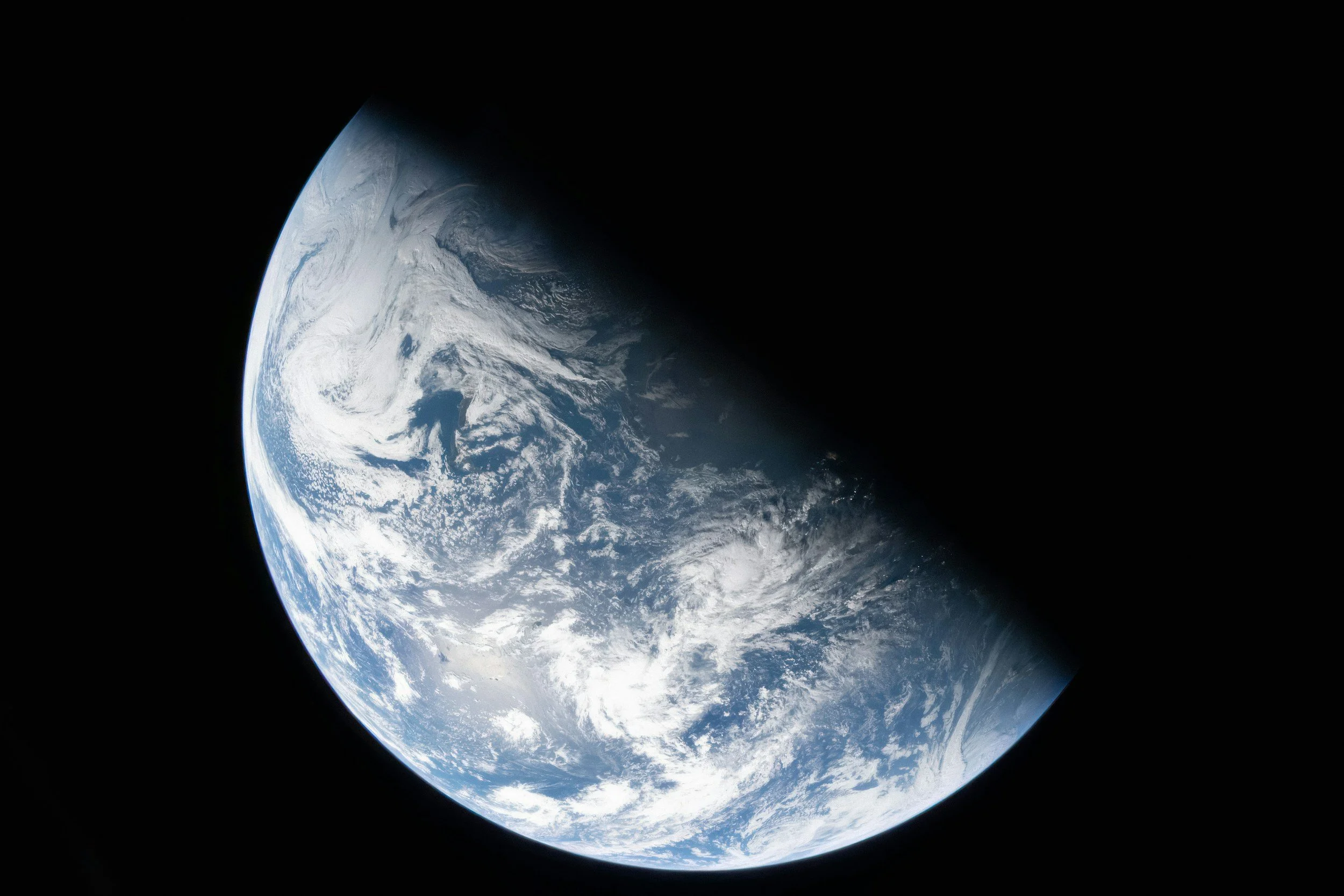
Every ceiling in the world is secretly an energy problem.
This is the ceiling above every other idea on this page. Every product, every breakthrough, every ambitious plan is quietly rationed by how much power the world has to spend — and we've been circling the same ceiling for decades instead of raising it. Fix this and every other number on this list gets easier for free.
But there's a second kind of energy nobody puts on the pitch deck, and it might matter just as much: the energy a person carries around inside their own field. Confidence. Vitality. Feeling like yourself in your own skin, literally. Call it self-energy — and it turns out this is where health and consumer actually live.
Most health advice is theater. Biology doesn't applaud.
Forget the moonshot cure everyone's chasing. Real health is the compounding, unglamorous stuff nobody bothers funding because it isn't dramatic enough — skin that misbehaves for reasons no one explained properly, hair that thins quietly, the everyday biology people just learn to live with. Solve enough of that, and a person's self-energy goes up. That's not a side effect. That's the whole point.
Curiosity never broke. The delivery system did.
Walk into any classroom and it's still sitting there, underneath the boredom. What collapsed is the on-ramp — built for a world that stopped existing decades ago, still pretending it's efficient. Fix the on-ramp and every other thesis here moves faster.
Fun isn't the reward for solving hard problems. It's the fuel.
People assume consumer is what you get to enjoy after the important stuff is solved. We think it's the opposite. Nobody sticks with a decades-long project if the ride there is miserable. Somebody has to make getting there feel good, or nobody arrives at all. We happen to be very good at that part. We kickstart consumer brands that become movements — and movements, it turns out, are just self-energy at scale: one person's excitement, interacting with itself, over and over, until it's carrying a whole crowd along with it.
None of this moves without a point of contact. That's where we show up.
Got curious?
Let’s talk about your ideas!